How to Unclog a Toilet — And How to Know When the Problem Is Bigger
From a simple clog to a main sewer backup, learn how to identify the problem, what you can safely try yourself, and when it's time to call a plumber.
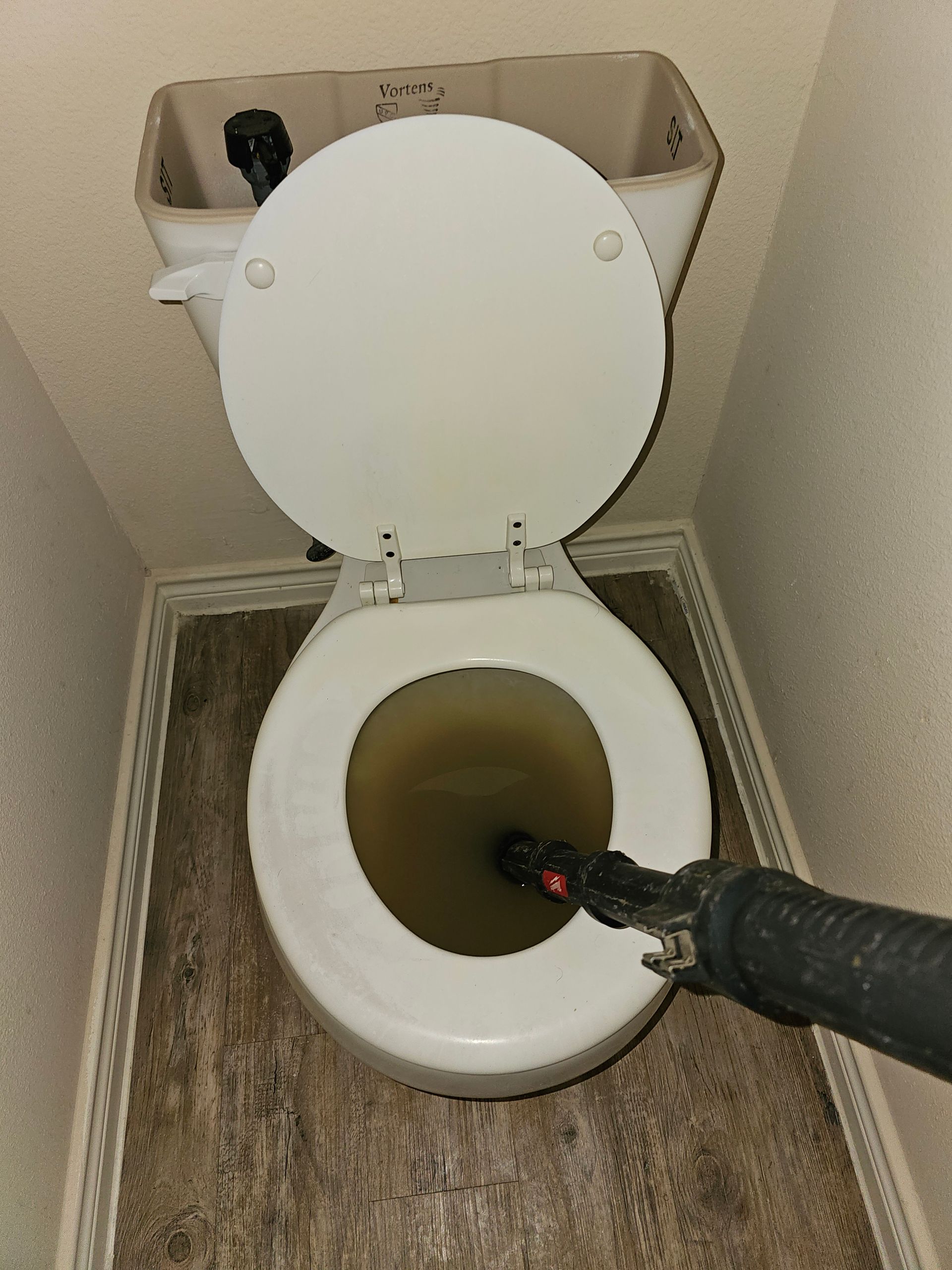
A clogged toilet is one of the most common plumbing problems in a home. Sometimes, the solution really is as simple as using a plunger. Other times, the toilet is only the first place you're noticing a much larger drain or sewer problem.
Before repeatedly plunging, pouring chemicals down the drain, or assuming you need a new toilet, there are a few things you can check.
At Chris The Plumber, we approach toilet stoppages by first determining an important thing:
Is the problem actually in the toilet, or is the toilet telling us there's a problem farther down the drain system?
Here's how you can start figuring that out.
Before Unclogging the Toilet, Check Your Main Cleanout
If you know where your home's main sewer cleanout is located, it's one of the first places worth checking.
A main cleanout is typically a capped pipe that gives a plumber direct access to the home's main sewer line. Depending on the house, it may be located outside near the foundation, in the yard, or occasionally somewhere less obvious.
If the main sewer line is backed up, you may find standing wastewater at the cleanout.
Be careful when opening a cleanout on a suspected backed-up sewer. Wastewater may be under pressure and can spill out when the cap is removed.
If the cleanout is holding wastewater, the problem is probably bigger than an obstruction inside one toilet.
Can't Find Your Main Cleanout?
You can still look for clues.
Run another fixture, such as a bathroom sink, bathtub, or shower, and watch the problem toilet.
Does the toilet:
- Bubble?
- Gurgle?
- Rise or fall unexpectedly?
- React when another fixture drains?
Try flushing another toilet in the home as well.
If running one plumbing fixture causes another fixture to bubble or back up, there may be a restriction farther downstream where those drains connect.
If multiple fixtures are backing up, stop running water.
Continuing to run sinks, showers, washing machines, or toilets can add more wastewater to an already restricted drainage system and potentially cause sewage to overflow into the home.
Does Holding the Toilet Handle Down Make a Difference?
Many homeowners don't realize how much the way they operate a traditional lever-style toilet can affect the flush.
Depending on the toilet's design and adjustment, quickly pressing and releasing the handle may allow the flapper to close sooner, resulting in a shorter flush.
Holding the handle down longer can keep the flapper open and allow more water from the tank to enter the bowl.
A shorter flush may be enough for liquid waste. When toilet paper or solid waste is involved, allowing the toilet to complete a full flush can provide more water to help carry everything through the toilet and into the drainage system.
Not every toilet operates exactly the same way, but if you're consistently "short flushing" a traditional toilet, try allowing the tank to fully discharge when flushing anything other than liquid waste.
Start With a Good Toilet Plunger
If only one toilet is affected and everything else appears to be draining normally, a plunger is usually the best place to start.
But the type of plunger matters.
A basic flat-bottom cup plunger works well for sinks and other flat drains, but it isn't usually the best choice for a toilet.
For toilets, we recommend a flange-style toilet plunger.
The extended rubber flange fits into the toilet's drain opening and helps create a better seal.
How to Properly Plunge a Toilet
Make sure there is enough water in the bowl to cover the rubber portion of the plunger.
Place the flange into the toilet's drain opening and establish a good seal.
Start with a controlled push. If the plunger is full of air, pushing down aggressively on the first stroke can splash dirty toilet water around the bathroom.
Once you've established the seal, use several firm push-and-pull strokes.
The goal isn't simply to push the obstruction farther into the pipe. The pressure and suction created by the plunger can help loosen the obstruction so water can move through again.
If the bowl is already completely full, don't repeatedly flush the toilet to "see if it worked." Give the water time to drop before testing it again.
When the Plunger Doesn't Work: Use a Toilet Auger
The next step for many toilet stoppages is a toilet auger, sometimes called a closet auger.
A toilet auger is specifically designed to travel through the curved trapway built into the toilet.
This is different from a regular drain snake.
Cheap Toilet Auger vs. Professional-Quality Toilet Auger
There can be a significant difference between an inexpensive homeowner-grade toilet auger and a good professional auger.
Higher-quality augers generally provide:
- Stronger cable
- Better control
- Better reach
- A more durable head
- Better protection around the porcelain
- Greater ability to work through or retrieve difficult obstructions
A quality toilet auger also has a protective guide tube that helps prevent the cable from scratching the visible porcelain.
This matters.
Once porcelain is badly scratched, those marks may be permanent.
What Can Be Stuck Inside a Toilet?
We've found plenty of things besides toilet paper.
Common toilet obstructions can include:
- Excessive toilet paper
- Wipes
- Feminine hygiene products
- Children's toys
- Plastic objects
- Cleaning products
- Small household items
- Other foreign objects
Sometimes an auger can break through or retrieve the obstruction.
Sometimes it can't.
That's when the toilet may need to come off the floor.
When Does a Toilet Need to Be Removed?
If plunging and properly augering the toilet don't solve the problem, removing the toilet can help determine what's happening.
We may pull a toilet when:
- A foreign object is suspected
- The toilet remains clogged after augering
- An object needs to be retrieved from the bottom of the toilet
- We need access to the branch drain below the toilet
- A sewer machine needs to be run
- A sewer camera needs access to the drainage system
- The stoppage repeatedly returns
Once the toilet is removed, we can inspect the toilet itself and gain direct access to the drain through the toilet flange.
Protecting Your Home While the Toilet Is Removed
Pulling a toilet can get messy if it isn't handled properly.
When Chris The Plumber removes a toilet, we protect the flooring around our work area before lifting the fixture.
We also wear shoe covers while traveling through the home to help prevent tracking dirt and debris from the work area into other rooms.
It's a small part of the job, but respecting the customer's home is just as important as fixing the plumbing problem.
Toilet Auger vs. Sewer Machine: What's the Difference?
This is where a simple toilet stoppage can turn into a drain-line stoppage.
A toilet auger is primarily designed to clear an obstruction in or immediately around the toilet's built-in trapway.
A sewer machine is designed to travel much farther into the drainage piping.
After the toilet is removed, the exposed toilet flange may provide access for a sewer machine to enter the branch drain.
This allows us to address stoppages that aren't actually inside the toilet.
For example, the toilet may be completely clear while an obstruction is sitting 10, 20, 30 feet or farther down the drainage system.
That's why repeatedly augering the toilet isn't always the answer.
Running a Sewer Camera
Once access is available, a sewer camera can sometimes be run through the toilet opening after the toilet has been removed.
A camera can also often be run through the home's main cleanout.
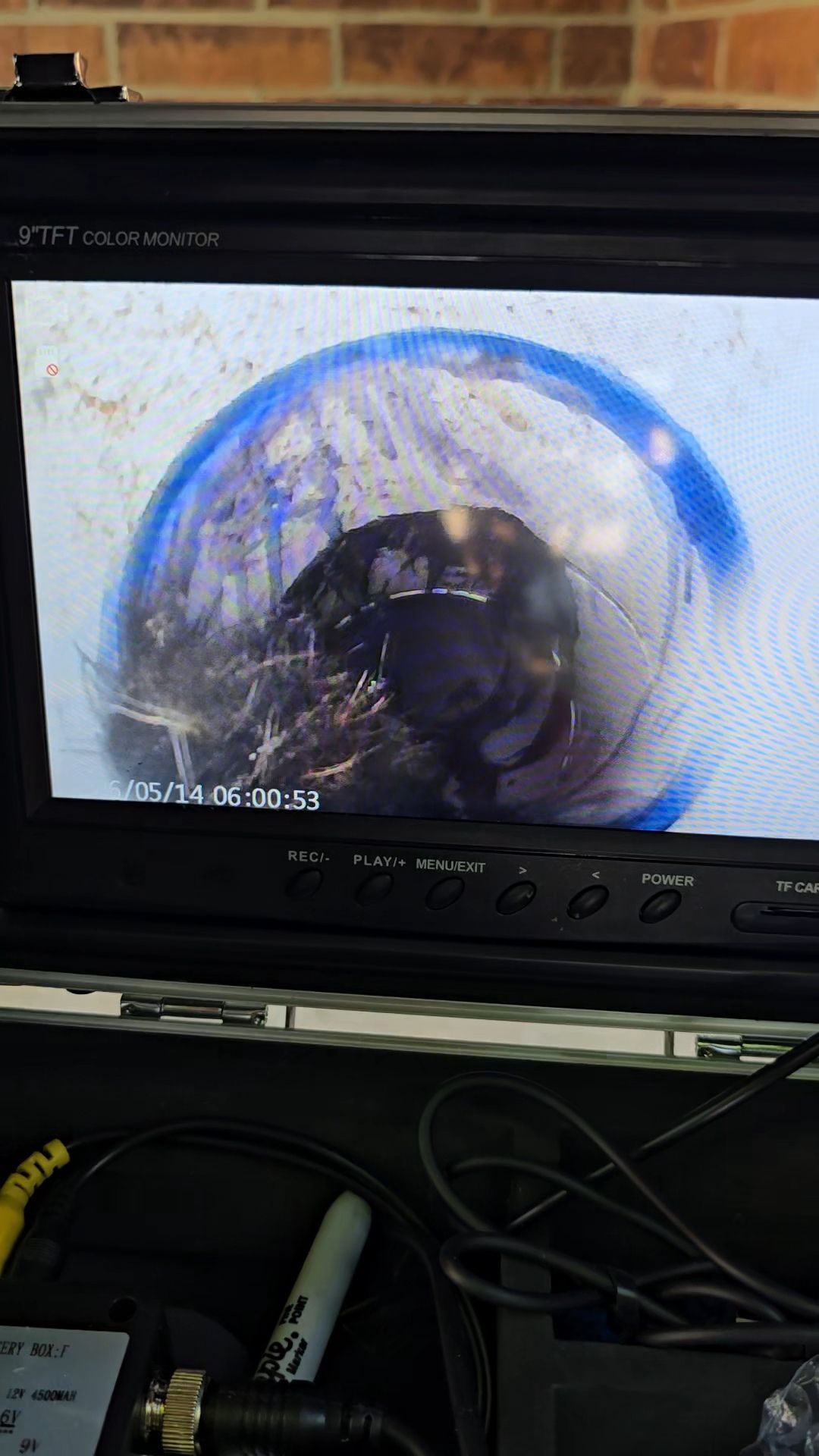
A sewer camera helps us see what's actually happening inside accessible portions of the drainage system.
Depending on the piping and conditions, we may find:
- Tree roots
- Heavy buildup
- Broken piping
- Separated connections
- Offset fittings
- Foreign objects
- Standing water
- Low spots or bellies
- Deteriorated cast iron
- Recurring obstruction points
This becomes especially valuable when a homeowner says:
"We just had this drain cleared. Why is it clogged again?"
Clearing a stoppage and determining why the stoppage happened are two different things.
If a drain repeatedly stops up, there may be an underlying condition that needs to be identified.
When Is Hydro Jetting Needed?
Not every clogged toilet or sewer line needs hydro jetting.
Sometimes a sewer machine is exactly what the situation calls for.
Other times, mechanically opening the line gets wastewater flowing again but leaves substantial buildup behind.
Hydro jetting uses high-pressure water and specialized nozzles to clean suitable drainage piping.
Depending on the condition of the line, hydro jetting can be useful for removing:
- Grease
- Sludge
- Heavy buildup
- Certain root intrusions
- Debris
- Material stuck to the interior walls of the pipe
One way to think about the difference is:
A sewer machine can open a blocked line. Hydro jetting can more thoroughly clean certain lines when conditions call for it.
The condition and material of the piping should always be considered before deciding whether hydro jetting is appropriate.
Why Does My Toilet Keep Clogging?
Recurring toilet clogs can happen for many different reasons.
Obstruction Inside the Toilet
Too much toilet paper, wipes, or a foreign object may become lodged inside the toilet's trapway.
Possible solution: Plunger, toilet auger, object retrieval, or removing the toilet.
Branch Drain Stoppage
The toilet itself may be perfectly clear while the pipe serving the bathroom is restricted.
Possible solution: Sewer machine through an appropriate access point.
Main Sewer Line Stoppage
If several fixtures are affected, the obstruction may be in the home's main sewer line.
Possible solution: Main-line drain cleaning followed by additional evaluation when appropriate.
Tree Roots
Roots can enter sewer piping through damaged joints, cracks, or other openings.
Possible solution: Mechanical cutting or hydro jetting when appropriate, followed by camera inspection to evaluate the condition of the pipe.
Heavy Buildup
Grease, sludge, scale, and other material can gradually reduce the usable inside diameter of drainage piping.
Possible solution: Mechanical cleaning and/or hydro jetting depending on the type and condition of the piping.
Broken or Separated Sewer Pipe
Drain cleaning may temporarily restore flow, but it cannot repair physically damaged piping.
Possible solution: Spot repair or replacement of the damaged section.
Belly or Low Spot in the Sewer Line
A section of pipe that doesn't maintain proper fall can hold water and waste instead of allowing it to continuously drain.
Possible solution: Correct the affected section of piping and establish proper grade where possible.
Poorly Flushing Toilet
Sometimes the drainage system isn't the problem at all.
The toilet may not be delivering enough water or enough flushing force to properly move waste through the trapway.
Possible solution: Diagnose and repair the toilet's internal components or replace the toilet when appropriate.
What Should You Put Down a Toilet?
The safest rule is also the simplest:
Human waste and toilet paper.
That's what your toilet and sanitary drainage system are designed to handle.
Everything else should generally go somewhere else.
What Should You NEVER Flush Down a Toilet?
Avoid flushing:
- Baby wipes
- So-called "flushable" wipes
- Paper towels
- Feminine hygiene products
- Tampons
- Diapers
- Cotton swabs
- Dental floss
- Condoms
- Cleaning rags
- Hair
- Cat litter
- Food
- Cooking grease
- Medication
- Plastic
- Children's toys or other household objects
But the Package Says "Flushable"
This causes a lot of confusion.
Something being capable of physically going through a toilet doesn't necessarily mean it breaks down like toilet paper or will safely travel through the entire drainage system.
Toilet paper is specifically designed to break apart rapidly when exposed to water and agitation.
Many wipes remain substantially stronger.
They may make it through the toilet and travel several feet down the drain before contributing to a blockage farther downstream.
That's why we recommend putting wipes in the trash — even when the package calls them flushable.
Should You Pour Drain Cleaner Into a Clogged Toilet?
We generally don't recommend pouring chemical drain cleaner into a clogged toilet.
Besides potentially failing to solve the actual problem, chemicals can remain trapped in the toilet or drainage system.
That creates another problem when someone eventually has to remove the toilet, plunge it, snake the line, or work around the wastewater.
If you've already used a chemical drain cleaner, tell your plumber before they begin working.
They need to know what they may be exposed to.
When Is a Clogged Toilet Actually a Sewer Problem?
One clogged toilet doesn't automatically mean you have a sewer problem.
But there are several warning signs that the problem may be farther downstream.
Watch for:
- Toilet bubbling when a sink drains
- Multiple toilets clogging
- Toilet bubbling when the bathtub or shower drains
- Water appearing in a tub or shower when a toilet is flushed
- Gurgling from multiple drains
- Sewage appearing around a main cleanout
- Multiple slow drains
- A toilet that repeatedly clogs after being cleared
- Sewage odors
- Wastewater backing up into the lowest fixture in the home
The more fixtures involved, the less likely you're dealing with an obstruction contained entirely inside one toilet.
A Clogged Toilet Isn't Always Just a Clogged Toilet
If one toilet is clogged and every other fixture in the house works normally, starting with a good flange plunger and then a quality toilet auger makes sense.
But pay attention to what the rest of the plumbing system is telling you.
If another fixture makes the toilet bubble, several drains are slow, sewage is present at the cleanout, or the problem keeps returning after being cleared, you may be dealing with something farther down the drainage system.
The progression may look something like this:
Plunger → Toilet Auger → Remove Toilet → Sewer Machine → Camera Inspection → Hydro Jetting → Repair, if necessary
The important part is determining how far the problem actually goes before assuming the solution.
Need Help With a Clogged Toilet or Sewer Line?
If you're dealing with a stubborn or recurring toilet stoppage in Midlothian or the surrounding North Texas area, Chris The Plumber can help determine whether the obstruction is inside the toilet or part of a larger drainage problem.
Depending on what we find, we can provide toilet stoppage service, drain cleaning, sewer-machine service, sewer camera inspections, hydro jetting, and sewer repair when necessary.
Chris The Plumber LLC
Professional Plumbing & Drain Services
Midlothian, Texas and surrounding Dallas/ Fort Worth areas